
4K IPTV Encoder: Complete Guide to Ultra HD IPTV Streaming in 2026
Discover everything about 4K IPTV encoders, including features, benefits, applications, and how to choose the best encoder for ultra HD IPTV streaming. Learn how 4K IPTV encoding improves video qualit

The demand for high-quality video streaming continues to grow as viewers expect crystal-clear visuals and seamless playback across multiple devices. A 4K IPTV encoder has become an essential component for broadcasters, IPTV service providers, content creators, and enterprises looking to deliver ultra-high-definition video content efficiently.
In this comprehensive guide, we’ll explore what a 4K IPTV encoder is, how it works, its key benefits, important features, and how to choose the best solution for your IPTV streaming needs.
What Is a 4K IPTV Encoder?
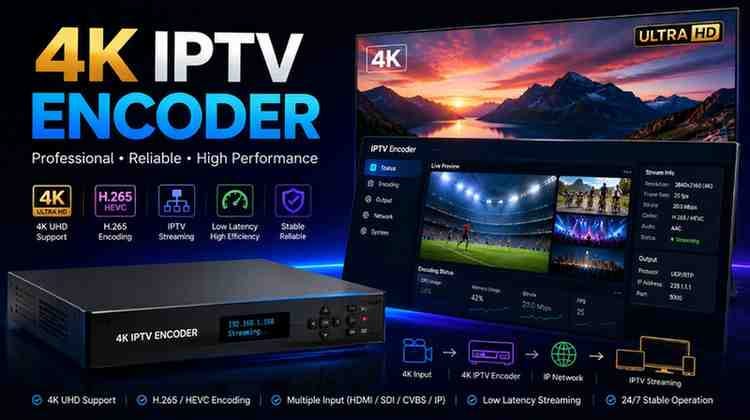
A 4K IPTV encoder is a hardware or software device that converts raw 4K video signals into compressed digital formats suitable for IPTV transmission over internet networks.
The encoder takes video input from cameras, media players, satellite receivers, or other video sources and compresses it using advanced codecs such as:
H.264 (AVC)
H.265 (HEVC)
AV1
Once encoded, the video stream can be delivered through IPTV platforms, content delivery networks (CDNs), mobile applications, smart TVs, and web streaming services.
Why 4K IPTV Encoding Matters
Modern audiences expect exceptional video quality. Traditional HD streaming is no longer enough for many applications, especially in:
Live sports broadcasting
Entertainment channels
Corporate events
Educational streaming
Digital signage
Government broadcasting
Hospitality IPTV systems
A professional 4K IPTV encoder enables content providers to deliver Ultra HD video while maintaining efficient bandwidth usage.
How Does a 4K IPTV Encoder Work?
The IPTV encoding process involves several steps:
1. Video Capture
The encoder receives video signals from:
HDMI sources
SDI cameras
Satellite receivers
Media servers
Video switchers
2. Video Compression
The encoder compresses the raw video data using advanced codecs to reduce file size while preserving image quality.
3. Stream Packaging
The compressed stream is packaged into IPTV-compatible protocols such as:
RTMP
RTP
RTSP
UDP
HLS
SRT
MPEG-TS
4. Content Delivery
The encoded stream is transmitted to IPTV servers, CDNs, or streaming platforms for viewer access.
Key Benefits of Using a 4K IPTV Encoder
Superior Video Quality
4K resolution provides four times more detail than Full HD, delivering stunning image clarity and immersive viewing experiences.
Bandwidth Optimization
Modern codecs such as H.265 significantly reduce bandwidth requirements without sacrificing quality.
Low-Latency Streaming
Professional IPTV encoders support low-latency transmission, making them ideal for live broadcasts and real-time events.
Multi-Platform Compatibility
Encoded streams can be viewed on:
Smart TVs
Android devices
iPhones and iPads
IPTV set-top boxes
Web browsers
OTT applications
Scalability
Whether you’re streaming to hundreds or millions of viewers, a reliable 4K IPTV encoder can scale with your audience.
Essential Features to Look for in a 4K IPTV Encoder
When selecting a 4K IPTV encoder, consider these critical features:
HEVC (H.265) Support
HEVC compression reduces bandwidth consumption by up to 50% compared to H.264.
HDR Compatibility
Support for HDR10 and HDR10+ enhances color accuracy and dynamic range.
Multiple Protocol Support
Look for support for:
HLS
RTMP
SRT
UDP
RTP
RTSP
Hardware Acceleration
Dedicated hardware encoding improves performance and reduces CPU load.
Remote Management
Web-based dashboards simplify monitoring and configuration.
Multi-Bitrate Streaming
Adaptive bitrate streaming ensures smooth playback across different internet speeds.
Applications of 4K IPTV Encoders
IPTV Service Providers
Deliver premium Ultra HD channels to subscribers.
Live Sports Broadcasting
Stream high-action events with exceptional detail and minimal latency.
Corporate Communications
Broadcast company meetings, training sessions, and webinars.
Educational Institutions
Provide high-quality online learning experiences.
Hospitality Industry
Offer premium IPTV services in hotels, resorts, and cruise ships.
Houses of Worship
Stream religious services to local and global audiences.
Hardware vs Software 4K IPTV Encoders
Hardware IPTV Encoders
Advantages:
Higher reliability
Dedicated processing power
Lower latency
24/7 operation capability
Best for:
Professional broadcasting
IPTV operators
Enterprise streaming
Software IPTV Encoders
Advantages:
Lower initial cost
Flexible deployment
Easy updates
Best for:
Small businesses
Content creators
Startups
How to Choose the Best 4K IPTV Encoder
Before purchasing a solution, evaluate:
Video Input Requirements
Ensure compatibility with your source devices.
Compression Standards
Prefer H.265 support for optimal bandwidth efficiency.
Streaming Protocols
Choose an encoder supporting your target IPTV infrastructure.
Future Scalability
Invest in a solution capable of handling future growth.
Technical Support
Reliable manufacturer support is crucial for mission-critical streaming operations.
Best Practices for 4K IPTV Streaming
To maximize performance:
Use high-speed internet connections
Enable adaptive bitrate streaming
Implement CDN distribution
Monitor network latency
Optimize encoder settings regularly
Keep firmware updated
Following these practices ensures smooth and reliable IPTV delivery.
Future of 4K IPTV Encoding
The IPTV industry continues to evolve rapidly. Emerging technologies such as:
AI-powered video optimization
AV1 compression
Cloud-based encoding
Edge computing
8K streaming
will further improve streaming quality and efficiency.
Organizations investing in advanced 4K IPTV encoder solutions today will be well-positioned for future broadcasting demands.
Conclusion
A 4K IPTV encoder is a critical technology for delivering high-quality Ultra HD video across IPTV networks. Whether you’re an IPTV provider, broadcaster, enterprise, or content creator, investing in the right encoder can significantly improve video quality, reduce bandwidth costs, and enhance viewer satisfaction.
By choosing a feature-rich encoder with H.265 support, low-latency capabilities, and multi-protocol compatibility, you can build a reliable and scalable IPTV streaming infrastructure that meets modern audience expectations.
As Ultra HD content consumption continues to grow, the role of 4K IPTV encoders will become even more important in shaping the future of digital video broadcasting.